50 plants · every pairing sourced
Companion Planting Chart for Vegetables, Herbs, Flowers and Berries
A companion planting chart shows which plants help each other and which to keep apart. Ours covers 50 garden plants and labels every pair by evidence: Proven (a field or lab trial), Practical (an extension service or the RHS explains the reason) or Traditional (long-standing garden lore with no trial behind it).
By the editorial team · Updated 2026-11-19 · Every pairing linked to its source
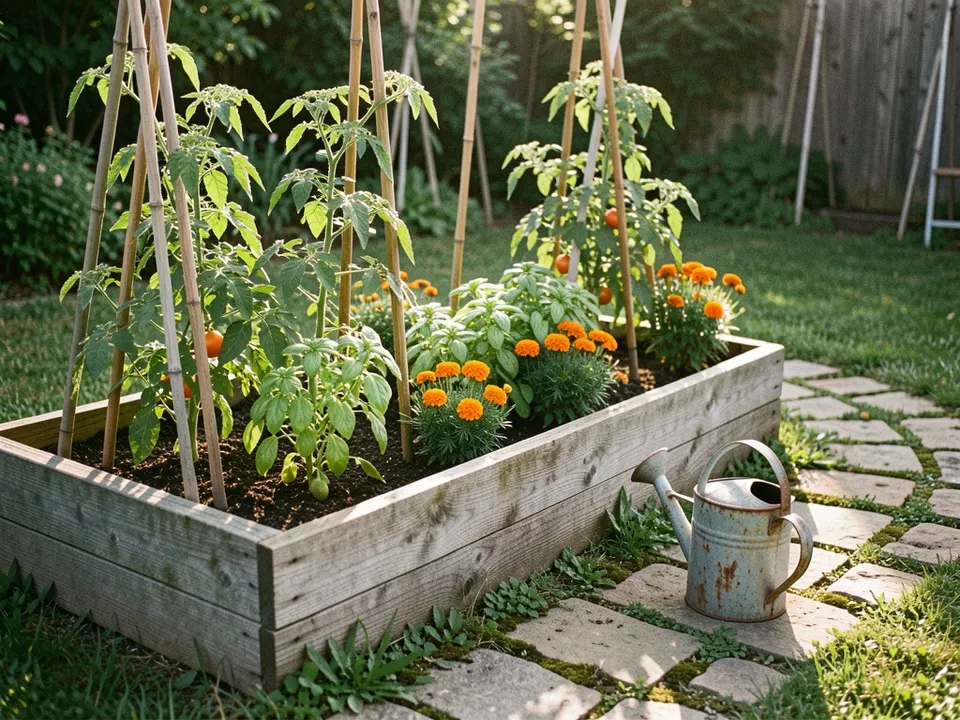
What grows well together?
Pick a plant to see its friends and foes, with the reason for each.
The full chart
Read across: your plant on the left, its neighbours along the top. ✓ good companions, ✕ keep apart; a shaded ✓ is proven by a trial. On a phone, scroll the table sideways.
| Tomato | Pepper | Eggplant | Potato | Cucumber | Zucchini | Winter squash | Pumpkin | Watermelon | Cantaloupe | Beans | Peas | Broccoli | Cabbage | Kale | Cauliflower | Brussels sprouts | Onion | Garlic | Carrot | Beet | Sweet potato | Radish | Lettuce | Spinach | Swiss chard | Arugula | Celery | Asparagus | Rhubarb | Sweet corn | Okra | Basil | Dill | Cilantro | Rosemary | Parsley | Thyme | Oregano | Sage | Chives | Mint | Lavender | Marigold | Nasturtium | Sunflower | Borage | Strawberry | Blueberry | Raspberry | |
|---|---|---|---|---|---|---|---|---|---|---|---|---|---|---|---|---|---|---|---|---|---|---|---|---|---|---|---|---|---|---|---|---|---|---|---|---|---|---|---|---|---|---|---|---|---|---|---|---|---|---|
| Tomato | ✓ | ✕ | ✓ | ✓ | ✓ | ✓ | ✓ | ✓ | ✓ | ✓ | ✕ | ✓ | ✕ | ✓ | ✓ | ✓ | ✓ | ✓ | ✓ | ✓ | ✓ | ✓ | ✓ | ✕ | ✕ | |||||||||||||||||||||||||
| Pepper | ✓ | ✓ | ✓ | ✓ | ✓ | ✓ | ✓ | ✓ | ✓ | ✓ | ✓ | ✕ | ✕ | |||||||||||||||||||||||||||||||||||||
| Eggplant | ✓ | ✓ | ✓ | ✓ | ✓ | ✓ | ✓ | ✓ | ✓ | ✕ | ✕ | |||||||||||||||||||||||||||||||||||||||
| Potato | ✕ | ✕ | ✕ | ✕ | ✕ | ✕ | ✕ | ✓ | ✓ | ✓ | ✓ | ✓ | ✓ | ✓ | ✓ | ✕ | ✕ | ✕ | ||||||||||||||||||||||||||||||||
| Cucumber | ✓ | ✕ | ✓ | ✓ | ✓ | ✓ | ✓ | ✓ | ✓ | ✕ | ✓ | ✓ | ✓ | ✓ | ||||||||||||||||||||||||||||||||||||
| Zucchini | ✕ | ✓ | ✓ | ✕ | ✓ | ✓ | ✓ | ✓ | ||||||||||||||||||||||||||||||||||||||||||
| Winter squash | ✕ | ✓ | ✕ | ✓ | ✓ | ✕ | ✓ | ✓ | ✓ | |||||||||||||||||||||||||||||||||||||||||
| Pumpkin | ✕ | ✓ | ✕ | ✓ | ✓ | ✓ | ✓ | ✓ | ✓ | |||||||||||||||||||||||||||||||||||||||||
| Watermelon | ✕ | ✓ | ✓ | ✓ | ✓ | |||||||||||||||||||||||||||||||||||||||||||||
| Cantaloupe | ✕ | ✓ | ✓ | ✓ | ✓ | ✓ | ✓ | |||||||||||||||||||||||||||||||||||||||||||
| Beans | ✓ | ✓ | ✓ | ✓ | ✓ | ✓ | ✕ | ✕ | ✓ | ✓ | ✓ | ✓ | ✓ | ✓ | ✓ | ✕ | ✓ | ✓ | ✓ | ✕ | ✓ | ✓ | ✓ | ✕ | ||||||||||||||||||||||||||
| Peas | ✓ | ✓ | ✓ | ✕ | ✕ | ✓ | ✓ | ✓ | ✓ | ✓ | ✓ | ✓ | ✓ | ✓ | ✓ | ✓ | ✕ | |||||||||||||||||||||||||||||||||
| Broccoli | ✓ | ✓ | ✓ | ✓ | ✓ | ✓ | ✓ | ✓ | ✓ | ✓ | ✓ | ✕ | ||||||||||||||||||||||||||||||||||||||
| Cabbage | ✓ | ✓ | ✓ | ✓ | ✓ | ✓ | ✓ | ✓ | ✓ | ✓ | ✓ | ✓ | ✓ | ✓ | ✓ | ✓ | ✓ | ✓ | ✕ | ✕ | ||||||||||||||||||||||||||||||
| Kale | ✓ | ✓ | ✓ | ✓ | ✓ | ✓ | ✓ | ✓ | ✕ | |||||||||||||||||||||||||||||||||||||||||
| Cauliflower | ✓ | ✓ | ✓ | ✓ | ✓ | ✓ | ✕ | |||||||||||||||||||||||||||||||||||||||||||
| Brussels sprouts | ✓ | ✓ | ✓ | ✓ | ✓ | ✓ | ✓ | ✓ | ✕ | |||||||||||||||||||||||||||||||||||||||||
| Onion | ✓ | ✓ | ✓ | ✕ | ✕ | ✓ | ✓ | ✓ | ✓ | ✓ | ✓ | ✓ | ✓ | ✓ | ✓ | ✕ | ✓ | ✓ | ✕ | ✓ | ✓ | |||||||||||||||||||||||||||||
| Garlic | ✓ | ✕ | ✕ | ✓ | ✓ | ✓ | ✓ | ✓ | ✓ | |||||||||||||||||||||||||||||||||||||||||
| Carrot | ✓ | ✓ | ✓ | ✓ | ✓ | ✓ | ✓ | ✕ | ✕ | ✓ | ✓ | ✓ | ||||||||||||||||||||||||||||||||||||||
| Beet | ✓ | ✓ | ✓ | ✓ | ✓ | ✓ | ✓ | |||||||||||||||||||||||||||||||||||||||||||
| Sweet potato | ✕ | ✕ | ✓ | ✓ | ✓ | ✓ | ||||||||||||||||||||||||||||||||||||||||||||
| Radish | ✓ | ✓ | ✓ | ✓ | ✓ | ✓ | ✓ | ✓ | ✓ | ✓ | ✓ | ✓ | ✓ | ✓ | ✓ | ✓ | ✓ | ✓ | ✓ | |||||||||||||||||||||||||||||||
| Lettuce | ✓ | ✓ | ✓ | ✓ | ✓ | ✓ | ✓ | ✓ | ✓ | ✓ | ✓ | ✓ | ✓ | ✓ | ✓ | ✓ | ||||||||||||||||||||||||||||||||||
| Spinach | ✓ | ✓ | ✓ | ✓ | ✓ | ✓ | ✓ | ✓ | ✓ | ✓ | ✓ | ✓ | ||||||||||||||||||||||||||||||||||||||
| Swiss chard | ✓ | ✓ | ✓ | |||||||||||||||||||||||||||||||||||||||||||||||
| Arugula | ✓ | ✓ | ✓ | ✓ | ✓ | |||||||||||||||||||||||||||||||||||||||||||||
| Celery | ✓ | ✓ | ✓ | ✓ | ✓ | ✓ | ✓ | ✕ | ✓ | ✕ | ✓ | |||||||||||||||||||||||||||||||||||||||
| Asparagus | ✓ | ✕ | ✓ | ✓ | ||||||||||||||||||||||||||||||||||||||||||||||
| Rhubarb | ✓ | ✓ | ✓ | ✕ | ||||||||||||||||||||||||||||||||||||||||||||||
| Sweet corn | ✕ | ✓ | ✓ | ✓ | ✓ | ✓ | ✓ | ✓ | ✓ | ✓ | ✓ | ✓ | ✓ | ✓ | ✓ | |||||||||||||||||||||||||||||||||||
| Okra | ✓ | ✕ | ✕ | ✓ | ✓ | ✓ | ✓ | ✓ | ✓ | |||||||||||||||||||||||||||||||||||||||||
| Basil | ✓ | ✓ | ✕ | ✓ | ✓ | ✓ | ✓ | |||||||||||||||||||||||||||||||||||||||||||
| Dill | ✕ | ✓ | ✓ | ✓ | ✓ | ✓ | ✓ | ✓ | ✕ | ✓ | ||||||||||||||||||||||||||||||||||||||||
| Cilantro | ✓ | ✓ | ✓ | ✓ | ✓ | ✓ | ||||||||||||||||||||||||||||||||||||||||||||
| Rosemary | ✓ | ✓ | ✓ | ✓ | ✓ | ✓ | ✓ | |||||||||||||||||||||||||||||||||||||||||||
| Parsley | ✓ | ✓ | ✓ | ✓ | ✕ | ✓ | ✓ | |||||||||||||||||||||||||||||||||||||||||||
| Thyme | ✓ | ✓ | ✓ | ✓ | ✓ | ✓ | ✓ | |||||||||||||||||||||||||||||||||||||||||||
| Oregano | ✓ | ✓ | ✓ | ✓ | ✓ | ✓ | ||||||||||||||||||||||||||||||||||||||||||||
| Sage | ✕ | ✓ | ✓ | ✓ | ✓ | ✓ | ✕ | ✓ | ✓ | |||||||||||||||||||||||||||||||||||||||||
| Chives | ✓ | ✕ | ✕ | ✓ | ✓ | ✓ | ✓ | |||||||||||||||||||||||||||||||||||||||||||
| Mint | ✓ | ✓ | ✓ | ✓ | ||||||||||||||||||||||||||||||||||||||||||||||
| Lavender | ✓ | ✓ | ✓ | ✓ | ✓ | ✓ | ||||||||||||||||||||||||||||||||||||||||||||
| Marigold | ✓ | ✓ | ✓ | ✓ | ✓ | ✓ | ✓ | ✓ | ✓ | ✓ | ✓ | ✓ | ✓ | ✓ | ||||||||||||||||||||||||||||||||||||
| Nasturtium | ✓ | ✓ | ✓ | ✓ | ✓ | ✓ | ✓ | ✓ | ✓ | ✓ | ✓ | ✓ | ✓ | ✓ | ✓ | ✓ | ✓ | |||||||||||||||||||||||||||||||||
| Sunflower | ✓ | ✓ | ✕ | ✓ | ✓ | ✕ | ✓ | ✓ | ||||||||||||||||||||||||||||||||||||||||||
| Borage | ✓ | ✓ | ✓ | ✓ | ✓ | ✓ | ✓ | ✓ | ✓ | |||||||||||||||||||||||||||||||||||||||||
| Strawberry | ✕ | ✕ | ✕ | ✕ | ✓ | ✕ | ✕ | ✕ | ✕ | ✕ | ✓ | ✓ | ✓ | ✓ | ✓ | ✓ | ✓ | ✓ | ✕ | |||||||||||||||||||||||||||||||
| Blueberry | ✕ | ✕ | ✓ | ✓ | ✓ | |||||||||||||||||||||||||||||||||||||||||||||
| Raspberry | ✕ | ✕ | ✕ | ✕ | ✓ | ✓ | ✓ | ✓ | ✓ | ✕ |
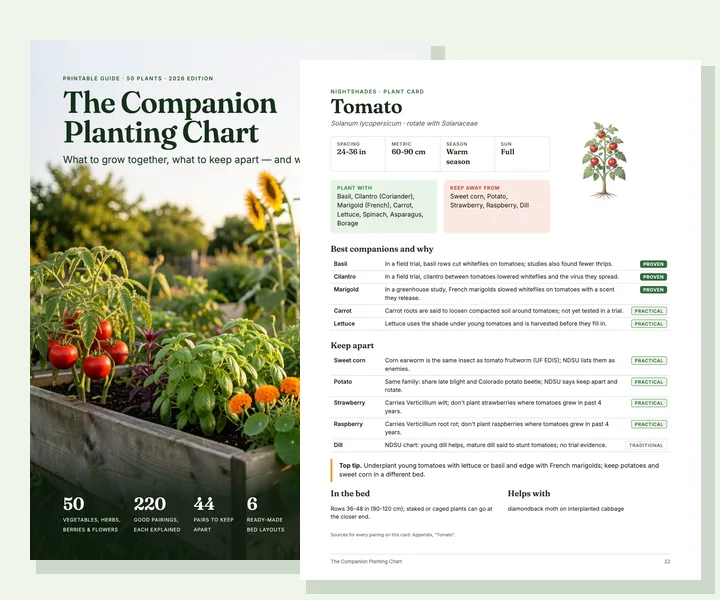
Free printable PDF
Get the complete companion planting chart
Print the one-page fridge version of this chart plus the full 50 x 50 matrix, so you can plan beds at the kitchen table without a screen.
- 1-page fridge chart + full 50 × 50 matrix
- 50 plant cards with spacing and reasons
- 6 bed plans drawn to scale
- US Letter and A4
This companion planting chart lets you look up any of 50 common garden plants and see its friends, its foes and the reason behind each one. Search for a plant, or filter to show only pairings backed by a trial.
Most free charts list pairs without saying where they came from. We traced each pairing to a university extension publication, the Royal Horticultural Society or a published study, and when the sources disagree, we say so.
How to read the companion planting chart
Each square where two plants meet holds one of three things:
- ✓ Friend - the two do better together, or at least one helps the other.
- ✕ Foe - keep them apart, in a different bed or a different year.
- Blank - no sourced reason either way. Most blank pairs are simply neutral.
Every ✓ and ✕ also carries an evidence label:
- Proven - a field, greenhouse or lab trial measured an effect, such as fewer pests or a higher yield.
- Practical - an extension service or the RHS gives a clear mechanism (shared disease, soil pH, shade, space) even without a dedicated trial.
- Traditional - the pair shows up in gardening charts or lore, but nobody has tested it. Treat these as optional.
Tap a plant name to open its full page with spacing, the reason behind every pairing and the source link.
Plan a companion bed in 4 steps
- Pick your main crop. Start with the plant you care most about, say tomatoes or cabbage, and open its row in the chart.
- Remove the foes first. Anything marked ✕ goes to another bed. Foes usually matter more than friends, because a shared disease such as late blight can cost a whole crop.
- Add one or two Proven or Practical friends. Choose partners with a reason you can name: a trap crop, a predator-feeding flower, a quick crop that fills the gaps before the main crop needs the room.
- Check spacing and family. Use each plant's spacing so companions don't crowd each other, and note the plant family so next year's bed follows a crop rotation.
If you want a ready-made starting point, the garden layouts guide explains how to place companions in a raised bed.
Top proven pairings
These pairs are backed by at least one trial. Results come from specific places and seasons, so expect a nudge in your favor rather than a guarantee.
- Tomato + basil - Mixed tomato-and-basil beds gave roughly 20% more harvest than the same space planted with one crop, in West Virginia University garden trials. Double-blind taste tests found no consistent flavor gain.
- Tomato + cilantro - in a Brazilian organic trial, a coriander intercrop lowered whitefly numbers and whitefly-borne virus.
- Carrot + onion - young onion rows cut carrot fly attack in a UK field trial. The effect faded once the onions started to bulb.
- Arugula before cabbage-family crops - sown 1-2 weeks early, arugula pulls flea beetles away from broccoli, cabbage and kale. It is a sacrificial crop, so don't expect clean leaves from it.
- Strawberry + borage - one UK garden study counted about a third more strawberries, and heavier ones, on plants growing near borage.
- Pepper + sunflower - Florida research found sunflower borders build up minute pirate bugs, which move into peppers and eat thrips.
- Eggplant + dill - a New Jersey field study found ladybirds and lacewings ate more potato beetle eggs when strips of dill and coriander grew alongside.
- Corn + beans + pumpkin - the Three Sisters mix beat single-crop plots on calories and protein per square foot in Cornell trials.
Common mistakes: pairs to keep apart
Many problems in a mixed bed come from a few well-documented conflicts:
- Tomatoes next to potatoes. Both are nightshades and share late blight and Colorado potato beetle, so blight in one spreads to the other.
- New berry beds on old nightshade ground. Tomatoes, potatoes, peppers and eggplant leave Verticillium wilt in the soil. Extension services advise a 4-5 year gap before strawberries or raspberries go there.
- Tomatoes beside sweet corn. The pest growers call corn earworm also feeds on tomato fruit, where it goes by tomato fruitworm.
- Blueberries in a vegetable bed. Blueberries need soil pH 4.5-5.5; most vegetables want 6-7. The pH, not the neighbor, is the real conflict.
- Mint planted loose. Its rhizomes spread through a bed fast. Grow it in a pot.
- Onions and garlic in the bean or pea row. Extension charts agree on this one, though no trial backs it. It is Traditional, but easy to follow.
The full list, including walnut trees and sunflower residue, is in plants not to grow together.
Is companion planting real?
Partly. Some effects hold up in trials: trap crops, flowers that feed predatory insects and quick crops that make better use of space. Others are mostly lore. Marigolds, for example, are widely said to repel Colorado potato beetle, but studies found no effect.
The RHS sums it up well: the benefits probably exist, but not for every crop in every instance. That is why our chart shows the evidence label on every pair. For the research in more depth, read does companion planting work?
Browse by plant group
- Vegetable companion planting chart - 32 crops grouped by family, with rotation notes.
- Herb companion planting - 11 culinary herbs, including which ones need a pot or a dry bed edge.
- Companion flowers for the vegetable garden - marigold, nasturtium, sunflower and borage, plus a pollinator strip.
- Berry companion planting - strawberries, blueberries and raspberries, where soil history and pH matter most.
Prefer a theme? Try the pizza garden, the salsa garden or pest control with companions.
Frequently asked questions
What things should be planted together?
Plants with a documented reason to share space: tomato with basil or cilantro, young onions among carrots, an early arugula strip before cabbage-family crops, borage near strawberries and sunflowers along the north side of peppers. Each of those has a trial behind it. Pairs listed only in old charts are optional, so start with the Proven ones.
What should cabbage not be planted near?
UC Davis and UF/IFAS charts list strawberries as a poor match for the cabbage family, a Traditional rating with no trial. Those charts also rule out tomatoes, but in tropical plots tomato grown among cabbage cut diamondback moth, while competing with the cabbage for light and water. Black walnut trees are a firmer warning: their juglone affects cabbage.
What are some good companion plants for eggplant?
Dill and cilantro are the best supported. In a New Jersey trial, strips of both beside eggplant raised predation of Colorado potato beetle eggs by ladybirds and lacewings. Lettuce also works as a short-term underplanting early in the season, because you harvest it before the eggplant canopy closes.
What not to plant around eggplant?
Keep future strawberry and raspberry beds off ground where eggplant grew, because eggplant hosts Verticillium wilt; Illinois Extension suggests a 5-year gap before raspberries. Avoid planting it near black walnut trees. The UF chart also lists fennel as a poor companion, a Traditional rating with no trial behind it.
What other plants deter pests?
Few plants truly repel pests. Most useful companions either lure pests away, like arugula for flea beetles, or feed the insects that eat them, like dill, cilantro and sunflowers. Iowa researchers saw less looper and cabbageworm feeding on brassicas interplanted with onion, thyme, nasturtium or marigold. See our pest-to-protector guide for the full list with evidence labels.
Do I need to follow every pairing in a companion chart?
No. Treat ✕ foes based on disease, pests or soil pH as firm rules and the Proven friends as strong suggestions. Traditional pairings are harmless to try but optional. A well-spaced bed with healthy soil and a sensible rotation matters more than squeezing in every listed companion.